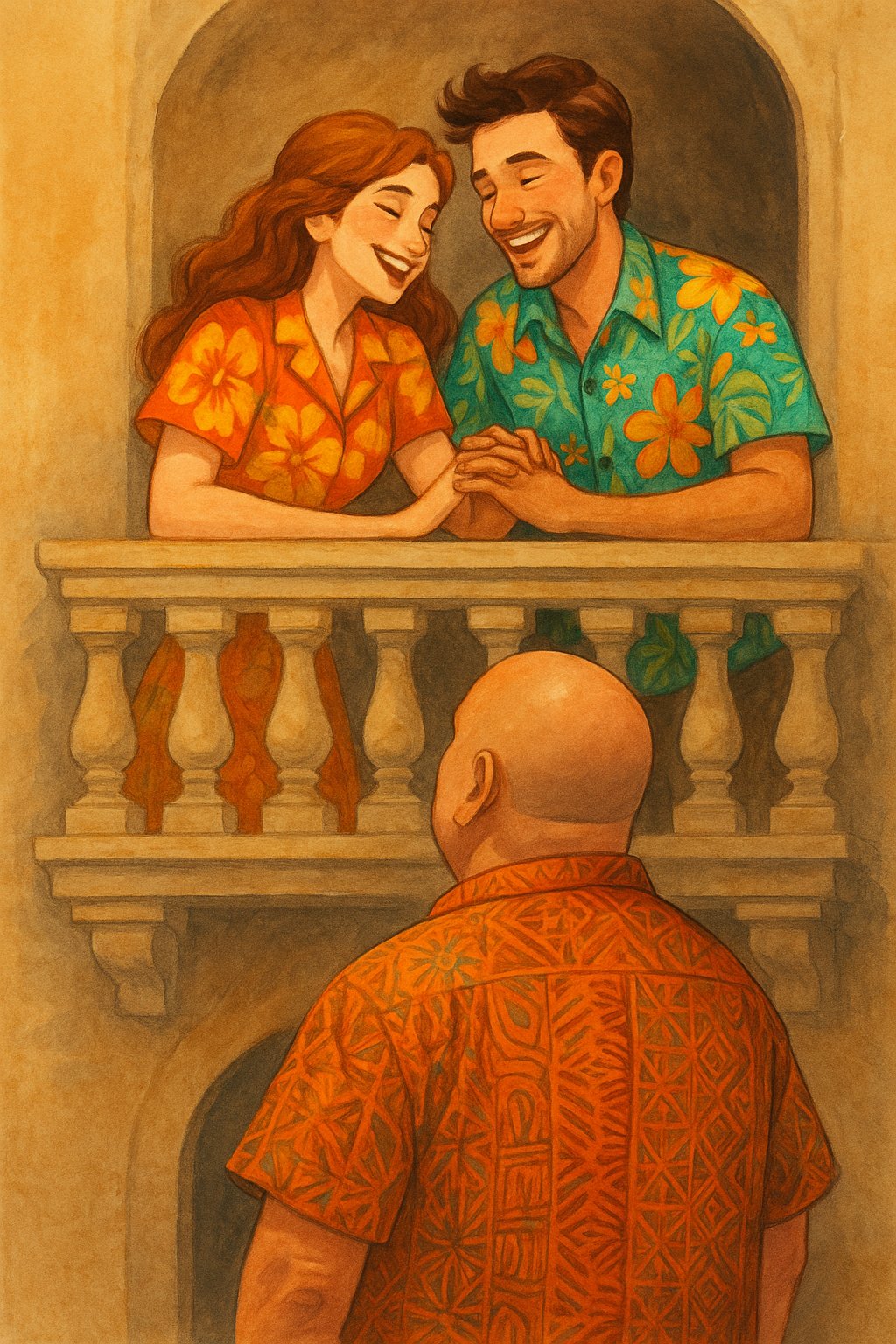
Star Crossed Lovers
(With sincere apologies to Romeo, Juliet, and anyone who would rather build IKEA furniture than talk about their feelings.)
Every so often, a client will look me straight in the eye and ask a question so honest, so raw, that the whole room goes still. Recently, a man asked me:
How can I bring myself to emotional vulnerability?
His wife had encouraged him to come to therapy — not an uncommon origin story — and to his credit, he was genuinely trying. The quaver in his voice said everything. There was hope in it, a little fear, and a quiet plea not to mess this up.
Now, emotional vulnerability is a deceptively dangerous topic. My therapist brain immediately flashed to Shakespeare. Emotional vulnerability did not go great for Romeo and Juliet. Two teenagers felt very big feelings, very fast, took absolutely no time to think things through, and ended up in a double coffin. Gorgeous poetry. Terrible outcome.
So before we sprint up the balcony shouting declarations of love, let’s slow this down.
A brief disclaimer before diving in:
I’m speaking here about men because that was the context of the session — not because women can’t be distant or men can’t be emotional. Socialization is a powerful force, and emotional shutdown happens across the gender spectrum. Please don’t shoot the messenger.
Alright. Let’s begin.
You Didn’t Become Stoic by Accident (Armor On is Armor Earned)
If someone has told you you’re emotionally shut down, I want you to hear this clearly: It’s not your fault, and it isn’t random. Stoicism is not a personality flaw. It’s an adaptation — usually a necessary one.
Some combination of:
- chaos
- trauma
- criticism
- bullying
- unpredictable or unavailable caregivers
- cultural expectations, including “boys don’t cry” conditioning
- poverty
- families where emotions were… optional
…taught your nervous system that emotions were bad – dangerous, inconvenient, sometimes good but mostly not. So your system built armor. And the armor worked.
It kept you safe when safety wasn’t available any other way. It helped you stay functional in environments where chaos, neglect, or hostility would have swept you away.
You didn’t misread the room.
You adapted to it.
And your emotional system is still protecting you. That’s why opening up now is like walking into battle without your shield. Opening up can make you question your own judgment.
But… Do You Really Want This?
Emotional vulnerability is not something you dabble in. You don’t “try it on.” You choose it. Intentionally.
Romeo and Juliet didn’t hesitate. They saw the balcony, jumped straight into love, and never looked back. Beautiful. Terrible. Not recommended.
Before you follow suit, ask yourself:
- Do I actually want this? Or is this for someone else?
- Am I ready for real version of being real? Or am I hoping for the Instagram version — the one with soft lighting, no mess, and zero emotional consequences?
Because here’s the truth you won’t see on a greeting card:
If you choose vulnerability, you will get hurt. Not all the time, not dramatically, but pain is part of the package.
So is joy.
So is closeness.
So is warmth, tenderness, genuine connection, and that rare feeling of actually being understood.
You don’t get Juliet’s balcony without risking her heartbreak (neither did Romeo).
It’s all one system.
And — this part is important — your emotional system will fight you on this. It will fire alarms. It will insist “unsafe!” It will nudge you toward every classic defense men use: making a joke, shutting down, changing the subject, withdrawing, intellectualizing, or suddenly being very interested in checking the thermostat.
If any of that happens, it doesn’t mean you’re failing.
It means your nervous system is doing exactly what it was trained to do — and you’re right on schedule.
You Don’t Know What You Don’t Know
People who grew up in emotional safety learned emotional skills early. It wasn’t formal training; it was just the water they swam in.
But you?
You learned survival, not vulnerability. And survival requires a completely different skill set.
Here’s the memo you missed while you were busy not drowning:
Emotional vulnerability is selective.
It does not mean opening your chest cavity to every human you meet. It means learning when to open up, who gets access, how much to share, and when to put the lid back on.
If you didn’t learn emotional skills early, you’re not broken — you’re just untrained. And grown-ups can learn.
Some of those skills include:
- noticing what you feel, and not dismissing it
- learning the language of emotion
- choosing appropriate moments to open up
- reading your partner’s signals
- pacing yourself
These are learnable. They’re not personality traits; they’re skills.
You Will Survive the Pain(s)
Let’s get honest: vulnerability stings. Not all the time, but enough.
But here’s the thing — you’ve survived far worse than anything emotional vulnerability will throw at you. The events that required your armor were likely far more intense, cruel, chaotic, or destabilizing than the discomfort of letting someone you love see your inner world.
You survived all of that.
You’re here.
You’re stronger now than you were then.
Your emotional system may not trust that yet, but it will learn — gradually — that you are no longer a child without power or choice. You’re an adult with more internal resources than you know.
Pain and joy share the same doorway.
You can’t numb one without the other.
Opening up gives you both — the hurt and the healing.
A DIY Map to Emotional Vulnerability (Compressed So This Doesn’t Turn Into “War and Peace”)
Every one of these deserves its own article, but here’s the abbreviated version:
- Build emotional awareness.
Just start noticing what you feel — even if you don’t know why. - Learn the vocabulary.
It’s hard to share an emotion you don’t have a name for. - Believe your body.
Your body reveals your truth before your mind does. - Try mindfulness (the real kind, not incense-and-gongs).
Just pause during the day to ask, “What’s happening in me right now?” - Therapy helps.
Dangerous journeys are most dangerous when taken alone.
If you want more depth, Google and ChatGPT will keep you busy for a long time. Or, reach out to me via my contact page.
Start Small: Emotional Reps
Please don’t sprint toward a balcony. Let’s start with small steps.
Try:
- admitting when you feel nervous
- sharing one honest preference
- letting yourself sit in discomfort for ten seconds longer
- revealing one feeling instead of closing the door completely
These are emotional push-ups — mildly uncomfortable, occasionally annoying, and guaranteed to make you stronger if you stick with them. You’re learning your internal landscape — not for anyone else’s sake, but for your own.
Why Vulnerability Might Be Worth It (And When It’s Not)
The upside of vulnerability includes:
- deeper connection
- letting your partner feel emotionally loved, not just logically loved
- feeling alive again instead of numb
- a richer relationship
- a fuller sense of your own humanity
But there are times when vulnerability is a bad idea:
- if you’re divorcing
- if you’re in a dangerous or abusive relationship
- if your home is not emotionally safe
- if vulnerability would expose you to harm
Vulnerability is powerful — and like anything powerful, it should be consensual, safe, and well-timed.Ultimately, the choice belongs only to you. Choose slowly. Choose intentionally. Choose wisely.
And if you ever want help navigating the terrain?
Well… that’s why therapists exist.
No balcony scene required.