Marriage and Family Therapist in Long Beach, California

Category: Being Assertive (Page 1 of 3)

Are you being taken for granted? Do you struggle to ask for what you want and need?

Relationships Are Built on Tuesdays

The Small Moments That Teach People Whether They Matter

Leadership coach Lee Povey recently wrote a thoughtful piece about workplace culture that immediately made me think about relationships.

One line especially stood out to me: connection is built through the small, repeated interactions that signal whether people matter.

That’s true at work.
That’s true in marriages.
That’s true in families.
That’s true everywhere human beings try to connect.

The Myth of the Grand Romantic Gesture

He’s contradicting the conventional wisdom we’ve absorbed from popular culture: that great relationships are built on great moments.

Sure, there are a few beautiful movies about ordinary devotion and long marriages. But those films rarely dominate Valentine’s Day culture. Instead, we get much more exposure to tropes like:

  • John Cusack standing outside a window with a boombox in Say Anything.
  • Tom Cruise bursting into the room with “You complete me” in Jerry Maguire.
  • Ryan Gosling rebuilding the dream house in The Notebook.

And look, I get it. Those scenes work because they tap into something real. Human beings do want to feel chosen, pursued, valued, and seen.

But the incredible emotional moments depicted in those scenes fade when the credits roll.

Real relationships keep going Tuesday morning when someone is distracted, irritable, exhausted, scrolling their phone, and only half listening. At breakfast. Or in the boardroom.

Attention Is the Real Currency

Povey points out that no amount of motivational speeches or catered lunches will make employees feel valued if every ordinary interaction tells them they are interruptions instead of people.

He’s saying employees know it when:

  • A manager listens.
  • Someone follows up.
  • People are respected in meetings.

We’ve all sat in meetings — Zooms and in-person alike — where someone is officially participating while clearly answering email, checking messages, or mentally somewhere else. You can see their eyes darting around the screen while their shoulders give away the email they’re answering just below the camera line. The faux engagement makes the whole meeting feel like a mandated waste of time.

But given how often I work with people whose success in business is matched only by the intensity of the Cold War politics at home, it seems many of us bring these behaviors home, scrolling through our phone while our partner is talking.

The irony is that we want deep connection while offering fragmented attention.

Enter the Gottmans

The Gottmans — researchers well known for studying long-term relationship success — often summarize healthy connection with a simple phrase: “small things often.”

Here’s what that means, in the language of my high school wrestling coach: “Is all you do is…”

  • Put the phone down.
  • Look them in the eye.
  • Soften your tone.
  • Check back on something they mentioned before.
  • Give them a hug.
  • Listen without immediately trying to fix everything.

Individually, these moments don’t sound like much. But both Gottman research and my own experience in the therapy office say otherwise.

Your partner can feel when they are competing with your phone.
Your children can feel when you are half-present.
Your coworkers can feel when you’re waiting to talk instead of listening.

Leave People Better Than You Found Them

Another part of Povey’s article that I appreciated was his personal standard: “Leave people better than you found them.”

That’s powerful in leadership. It’s even more powerful in intimate relationships.

Imagine approaching your relationship that way.

Not perfectly. Not performatively. Not with fake positivity. Just intentionally.

What if all you did was consistently focus your attention so that when a conversation ends, your partner feels more understood? Maybe calmer. Maybe encouraged. Maybe challenged, but respected.

Maybe you simply make sure they know they matter to you.

But What About Meeeeee?

Yes, all this is fine and good — attend to your partner and whatnot — but at some point you also have to advocate for yourself.

When do you get to say it’s their turn to do the dishes? When do you get to say that Aunt Betty’s feelings are still hurt from the way your beloved spoke to her last time she visited?

Nothing here should be taken to mean you avoid the tough topics, the difficult conversations. It just means being thoughtful in how you have them.

The Gottmans recommend using a “softened startup.” They say this because their research has shown that the biggest predictor of how a conversation ends is how it started. In practice, this means: say what you need to say, but say it nicely. And by nicely, I mean without contempt, humiliation, or aggression.

If you’re not sure how to do that, look up “I statements” in your favorite internet browser.

Culture Change: The Secret Ingredient

However we interact with others, over time those repeated interactions become culture.

That’s true in workplaces.
That’s true in families.
That’s true in marriages.
That’s true in friendships.

Which means something important: Every one of us has more power than we think.

No, I’m not the therapist telling you that you can change others, or somehow magically create a perfect relationship.

I’m saying that we can consistently bring something better into the spaces we occupy.

More attention.
More steadiness.
More kindness.
More honesty.
More presence.
More respect.

And when we bring those things consistently enough, culture changes:

Better stops being exceptional. Better becomes ordinary.

The secret ingredient? It’s you.

I Think My Partner Is Cheating—Do I Confront Them or Wait?


Short answer: neither.
Longer answer: you need a better question.

Most people jump to one of two options:

  • Confront and “win” the argument
  • Wait and hope the feeling goes away

Did you notice that neither of those options offers hope for a relationship that feels stable, honest, and connected?

So let’s slow this down and move to a better question.

What Do You Actually Want?

Be honest. Are you looking to be “right?” Or do you want to feel secure in your relationship?

When we’re worried, our fight-or-flight system kicks in. Our instincts push us to confront—hard—or avoid—completely.

Building a better relationship requires something different.

Shift Your Focus

Your brain may be churning with “what ifs” about your partner. You’ll have a better foundation if you start with yourself.

What are you actually feeling?

  • Disconnected
  • Anxious
  • Suspicious
  • Rejected
  • Angry
  • Hurt
  • Lonely
  • Unseen

We tend to dismiss feelings and chase “evidence.” And yes, sometimes there is clear evidence—messages, receipts, unexplained absences. When it’s obvious, it’s obvious.

But most of the time, it’s not.

More often, emotions start shaping the story. We connect dots that may or may not belong together.

False positives happen. Past hurt, insecurity, or disconnection can fill in the gaps with worst-case assumptions.

And also: just because you’re paranoid doesn’t mean something isn’t actually wrong.

So don’t dismiss your feelings—but don’t treat them as facts either.

Take a page from statistics: don’t chase outliers—look for patterns.

  • They seem less present
  • Conversations feel shallow or avoidant
  • Something just feels… off

That matters. But it’s not proof.

Then: Look at the Relationship

If you’re worried about an affair, there’s a lot you don’t know—and may never know. But you can assess your connection with your partner.

Here’s why: relationship researcher John Gottman found that affairs often grow in relationships where partners avoid conflicts, or create emotional distance under stress.

So ask:

  • What’s not being talked about?
  • Where are the gaps?

Then go find out.

Not with an interrogation—but with a spirit of exploration and curiosity.

How to Talk Without Blowing It Up

If you come in hot—accusations, cross-examination, “Where were you?”—you’ll get defensiveness at best, dishonesty at worst.

More likely, you’ll just get another version of the same fight you’ve already had.

Instead, try this:

“I’ve been feeling disconnected and a little worried about us. Can we talk about what’s been going on?”

Maybe you think that question is too “soft.” Like you should call out the “elephant in the room.” Let’s break that down.

What About Just Asking Directly?

You can.

But understand what you’re asking.

If someone is having an affair, dishonesty is already part of the situation. A direct question doesn’t guarantee a direct answer.

That doesn’t mean never ask.
It means don’t expect that question alone to resolve your uncertainty.

The Real Data You’re Looking For

You’ve approached this with curiosity instead of accusation. Now it’s time to watch what happens.

Pay attention to:

  • Do they make time for the conversation?
  • Are they present, or distracted?
  • Do they make eye contact?
  • Are they open, or guarded?
  • Curious, or dismissive?

This is your answer key.

The best indicator of how engaged your partner is is how they engage when you reach for them.

And if they’re not engaged—then you have the answer you need.

The affair, if there is one, is just one more layer of disengagement. It doesn’t make the question irrelevant—but it does put it in context.

By The Way

A lot of people look to sex as the indicator:

“If they were cheating, our sex life would be worse.”

Not necessarily.

Research shows some people report equal—or even improved—sex at home during an affair.

So don’t use that as your compass. Look at the emotional connection instead.

So… Confront or Wait?

Neither.

Waiting is avoidance.
Confrontation is escalation.

If you want to improve your relationship:

  • Get curious
  • Get honest about your experience
  • Invite your partner into a real conversation

And If You’re Thinking “I’m Done…”

Be honest about that too.

If you’re thinking, “If they’re cheating, I’m out,” then give real thought to whether you want to stay in this relationship at all.

Because at that point, the question isn’t “Are they cheating?”

It’s “Is this working for me?”

Final Thought

If you think your partner is cheating, the underlying issue is trust and connection.

The affair—if it exists—is a problem. But it’s not happening in a vacuum.

If you’re having these thoughts, something in the relationship isn’t working the way it needs to—whether there’s an affair or not.

And that’s where your leverage is.

Not in proving something.
Not in catching something.

In deciding what kind of relationship you want—and what you’re willing to do to build it. Because once you open this door, the question stops being:

“Are they cheating?”

And becomes:

“What kind of relationship am I in… and is it one I want to keep building?”

That answer comes from you first.

Then—if you’re willing—from both of you.

Why Couples Drift Apart Even When They Love Each Other

The problem isn’t conflict. The problem is avoidance.

Let’s talk relationships

Last week I closed the files on three couples. No affairs. No screaming matches. Just good people who loved each other and somehow kept missing each other. Different stories, different struggles.

In each case, the partners were trying hard to get the other person to understand what mattered to them. The turning point came when they slowed down enough to listen. Once that happened, something else became possible: each partner could risk letting the other person see what lay underneath the argument.

Helping bring about that shift is a big part of relationship therapy. What follows are a few vignettes of how it sometimes happens in the room.

These vignettes are representative composites rather than descriptions of any single couple. Details have been changed to protect confidentiality while illustrating real patterns from my practice.

When Integrity Turns Into Intensity

One couple came in because one partner felt a powerful responsibility to confront things that felt wrong—whether in politics, family dynamics, or everyday life. From his perspective, speaking up wasn’t anger; it was integrity. But the intensity of that stance was slowly pushing the relationship into a corner.

The breakthrough came when he began to see something he hadn’t fully understood before: not just his intention, but the impact of that intensity on the person most important to him.

Once he began slowing himself down, the dynamic between them shifted. The emotional temperature dropped. Safety emerged. The quieter partner—who had spent years managing the intensity around her—started speaking more openly, even confidently. She questioned him, pushed back, even laughed more easily. As conversations became calmer and more honest, both partners began understanding each other more clearly, allowing the relationship to grow closer and more intimate.

When Anger Feels Like Identity

The first couple needed to lower the emotional temperature.

The next couple had already done that. Their relationship was calm, cooperative, and highly functional. They trusted each other completely with the logistics of life.

But emotional trust was harder to reach because one partner carried anger differently. Growing up, opinions and emotions were punished, and he fought hard to keep anger as part of who he was. To him it wasn’t just a feeling—it was integrity, proof that he could stand his ground.

His partner experienced that anger very differently. Patience and kindness were part of her nature, and for a long time she absorbed the intensity rather than challenging it.

What shifted was his realization that the very qualities that drew him so strongly to her—her steadiness, her kindness—were also the qualities his anger was putting at risk.

As he slowed down and trusted that he could be heard without blowing up, she didn’t retreat. She stayed, and became more open, more willing to take emotional risks. And in that steadiness, a deeper kind of trust began to grow—one that allowed both of them to speak more honestly and connect more closely than before.

When Life Crowds Out the Relationship

The third couple didn’t struggle with anger or emotional withdrawal. Their challenge was something I’ve seen more often than you might expect: two capable people whose busy, successful lives had, over time, put the relationship on the back burner. They came in looking for a way to turn the heat back up.

Both were deeply committed to the relationship, but their lives had gradually organized themselves around work, responsibility, and getting things done. When stress rose, the instinct for both of them was the same: push forward and handle the next task. Over time, that habit left less and less room for the relationship itself.

Important conversations kept getting postponed. They wanted a family, but the years were passing and no real steps were being taken. Each felt the pressure in different ways, but neither quite knew how to turn the momentum of their lives toward each other long enough to address it together.

What helped was recognizing that the distance between them wasn’t about lack of love or commitment. It was about attention. Once they began making room for the conversations they had been putting off—and the decisions they had been postponing—they were better able to see the trust and commitment that had always been there. The connection they were looking for had never disappeared; it had simply been crowded out by everything else.

Different Problems, Same Turning Point

Looking back at these three couples, what stands out isn’t that they had the same problem. They didn’t.

  • One struggled with intensity that overwhelmed the relationship.
  • Another was navigating what it meant to hold onto a hard-won sense of self without damaging the connection that mattered most.
  • The third had quietly allowed careers, obligations, and forward momentum to crowd out the conversations that would shape their future together.

As it is with icebergs, what appeared on the surface was only a part of the story.

The Whole Story Is Always Much Deeper

There’s a common stereotype that couples come to therapy because they’re constantly arguing and can’t get along.

What made these three couples interesting is that none of them would have described their relationship that way. Arguments weren’t the hallmark of their relationships. In different ways, all three couples had actually gotten quite good at avoiding them.

Even so, the relationships weren’t working.

What began to emerge in the room were deeper questions—questions that many couples wrestle with quietly long before they ever walk into a therapist’s office:

Can I actually be who I am in this relationship, or do parts of me have to shrink for it to work?

If I show you what really matters to me—my fears, my convictions, the parts of me that are rough around the edges—will you still want to be here?

And if we keep living the way we are now… is this really the life I want to be building?

When couples slow down enough to listen, those deeper questions finally have space to emerge. And when they do, something important shifts. The argument stops being about winning a point and starts becoming a conversation about what really matters.

That’s where the real work of a relationship begins—and often, where the relationship can begin moving forward again.

Most couples don’t need a different partner.
They need a different conversation.

Feelings Are Feminine

The right tool for the right job.

Yes, there it is: I said it.

But I’m not the first to say it. This is a message that gets repeated for men and boys countless times, and countless ways.
“Ignore the pain.”
“Get a job.”
“Get over it.”
“Man up.”

And much worse.

I’ll tread carefully here. This is a gendered topic, and those can get overheated fast.

You could argue it’s better to avoid it. But when you see the same pattern week after week in your office, avoidance stops being helpful.

At some point, it needs to be named.

A man comes in because his relationship is struggling. He cares about his partner. He wants things to be better. He’s trying. And still, his partner has a list of complaints:

“I don’t feel connected to you.”
“You’re too angry.”
“You don’t open up.”
“I don’t feel like you really see me.”

His thoughts are confused. From his perspective, he’s showing up. He’s thinking about the relationship. He’s trying to solve the problems. He’s loyal. He’s present.

What’s worse is what he’s feeling: helplessness. Worse than that: he can’t identify the feeling other than discomfort leading to irritation leading to defensiveness. The path from defensiveness to anger is short.

It makes no sense to him why all the work he’s doing isn’t translating into connection—and, at times, still leaves him feeling unseen or unappreciated.

Thinking Instead of Feeling

Men learn early that feelings are feminine. If they let themselves experience—or worse, express—feelings, they risk being seen as weak.

So they adapt.

They analyze.
They problem-solve.
They try to “fix” things.

Valuable skills. Helpful, certainly.

But connection—the kind that sustains intimacy—is not primarily a thinking process. It’s an emotional one.

If you can’t access your own emotional experience, it becomes very difficult to attune to someone else’s.

That’s not a character flaw. That’s a skill gap.

How We Got Here

The Gottman Institute recently wrote about how boys are often taught, directly and indirectly, to move away from their emotional experience.

This isn’t just cultural commentary. There is research behind it.

A large body of developmental research shows that gender differences in emotional expression are not present at birth, but emerge over time through socialization—what boys and girls are taught is acceptable to feel and show.

By early childhood, boys are already being steered toward externalizing emotions like anger, while girls are more supported in expressing sadness, empathy, and vulnerability.

And those patterns matter, because emotional expression is not just “nice to have”—it’s tied directly to social competence and relationship functioning.

There’s Even a Name for It

When someone has difficulty identifying and expressing their emotions, we call that alexithymia.

Plain English: “I feel something… but I have no idea what it is.”

That doesn’t mean the feelings aren’t there.
It means they were never learned, named, or practiced.

And if you can’t identify what you feel, you can’t share it.
And if you can’t share it, your partner can’t feel connected to you.

This Is Gonna Hurt

When emotional awareness is limited, relationships feel it.

If you can’t clearly identify what you’re feeling:

  • It’s harder to communicate it
  • It’s harder to stay present with someone else’s emotions
  • It’s easier to default to thinking instead of feeling

Your partner experiences that as distance. Yes, you care, but they can’t feel it.

When thinking replaces feeling, conversations start to look like this:

  • logical instead of emotional
  • solutions instead of connection
  • explanations and defensiveness instead of shared experience

Now you have all the ingredients for escalation—and all the offramps are still “under construction”.

Why Anger Becomes the Go-To

Short version: for many men, the first response to relational stress isn’t anger—it’s avoidance. Work, screens, distraction, staying busy—anything that keeps them from having to sit with what they’re feeling.

That can work for a while.

But when avoidance stops working—when the pressure builds or the relationship pushes for connection—something has to come out. And often, what comes out is anger. For some men, it’s the safest emotion available. For others, it’s the only one they know how to access.

Yes, that sounds backwards.

But vulnerability—fear, hurt, shame—has often been met with ridicule or rejection. Anger, on the other hand, is familiar, accessible, and even socially permitted. So it becomes the default.

Underneath anger, there’s usually:

  • hurt
  • fear
  • shame
  • disappointment

When those emotions aren’t accessible, anger ends up carrying the load—and that creates problems in relationships.

Emotionally Blind—and In a Bind

This is the part we don’t talk about enough.

Many men were never taught how to be emotionally aware or expressive, and then, as adults, they’re expected to be emotionally attuned partners. That’s a tough transition—even if there were a clear roadmap. And there isn’t one.

So men do what they’ve been trained to do: they try to solve an emotional problem using the tools they have. They think harder, analyze more, and try to figure it out.

But emotional connection isn’t something you can think your way into. It’s something you have to feel your way into.

And if you were never taught how to do that, it’s frustrating—for the men I see in my office, and frankly, for me too.

Speaking of the Therapy Office

If a man is struggling with emotional connection, intimacy, or communication, the question often comes up: is this individual work, or couples work?

The answer is: it depends.

If anger is severe—or if safety is a concern—individual work needs to come first. But for many couples, the issue isn’t danger. It’s disconnection. And connection is a relational skill, which means it often develops best in a relational setting.

Couples therapy gives people a chance to practice things that are hard to learn alone: staying present with emotion, expressing vulnerability, and responding to a partner in real time. Those are not abstract skills. They are lived, relational experiences.

Regardless of where the work happens, the core is the same: staying in the conversation when it feels uncomfortable, saying the thing that feels awkward, and allowing emotion to be present without immediately trying to fix it.

That’s the work.

If You’re a Man Reading This

If any of this resonates, there’s nothing “wrong” with you. You learned what you were taught. But those lessons may not serve you in the kind of relationship you actually want.

The good news is that these are skills, and skills can be learned. Emotional awareness is learnable. Connection is learnable. Intimacy is learnable.

You don’t have to become a different man. You become a more capable one.

If You’re Seeing Your Man in This

This may help explain what you’re experiencing. It doesn’t excuse harmful behavior, but it can help make sense of the gap.

What looks like disinterest is often limited access. And that can change—but only if he’s willing to do the work.

Until then, your role may need to be different: clarity about what you need, boundaries around what you will and won’t accept, and a willingness not to over-function on his behalf.

You can’t do his work for him.

The Bottom Line

We ask men today to be:

  • strong
  • capable
  • reliable
  • and emotionally present

That last one requires a skill set many men were never taught.

But it can be learned.

And when it is—it changes everything.

Why the Couple Is the Foundation of a Healthy Family System

The most important thing in your relationships is your partner.
More important than:

  • your ex(es).
  • your children.
  • your parents.

Put another way: In a healthy family system, the couple sits at the top of the family hierarchy.
Not above each other.
Above everyone else: kids, pets, and extended family.

This idea reliably makes people uncomfortable, so before anyone starts yelling equality!, let’s slow down.

Families are not democracies, and children (or Labradoodles) are not junior board members. Equal dignity does not mean equal authority.

Hierarchy gets a bad reputation because people confuse it with dominance, authoritarianism, or patriarchy. Let’s reframe the question from “Who’s in charge?” to “Who’s responsible?”

Your children will run the show…

…if you let them.

It doesn’t matter that they lack the brain development, emotional regulation, and life experience required to manage adult responsibility. When no one is clearly in charge, nature abhors a vacuum—and your children will slide right into the space where your better judgment should be.

This is not healthy. For them or for you.

A child who thinks, “I’m in charge!” does not sleep better at night. (For one thing, there’s no bedtime.) And I sincerely hope I don’t have to explain why it’s also not great for the adults.

Being “at the top” doesn’t mean being harsh, arbitrary, or controlling. It means being clear, fair, consistent, and predictable. You guide more than you dictate. You listen—without handing over the keys.

Yes, this applies to pets too

I love animals. I really do.

But prioritizing a pet’s comfort, routines, or preferences over your partner’s well-being is a reliable way to damage a relationship. This most often shows up not with well-adjusted, well-trained pets, but in situations where a pet’s needs are unmanaged or overwhelming—aging pets struggling with incontinence, chronic illness, or frequent vomiting; animals that were never properly trained; or pets whose presence triggers allergic or health reactions in a partner.

In those cases, the issue isn’t the pet—it’s the absence of limits, problem-solving, or shared responsibility. When one partner is expected to simply tolerate disrupted sleep, persistent messes, odors, health issues, or loss of shared space “because the pet comes first,” the message is clear, even if unintentional.

That message is not repairable through reassurance alone.

And in case you’re wondering why I bring this up: I’ve seen the damage “fur babies” can do to adult relationships more times than I care to count—not because the animals are bad, but because the couple isn’t treating their relationship as the primary one.

What about extended family?

Extended family is trickier. Culture, finances, and caregiving realities matter. But the principle still holds: too many people “in charge” creates confusion, divided loyalties, and stress. Children quickly learn to exploit gaps in an unaligned parenting team, and adults burn out trying to keep everyone happy.

A stable family needs a clear center.
And that center must be the couple.

OK, but what about cultures where caring for extended family is expected?

In many cultures, caring for aging parents or younger siblings is not optional—it’s a moral obligation. Multi-generational households are common, functional, and deeply meaningful. None of that contradicts the idea that the couple should be the center of the family system.

The issue is not whether extended family is included.
The issue is how decisions are made, and whose needs are treated as non-negotiable.

A couple can live with extended family and still be the primary unit—if decisions about caregiving, finances, privacy, and boundaries are made together. What becomes corrosive is when these arrangements are inherited by default, rather than chosen deliberately by both partners.

Cultural tradition does not require a spouse to disappear.
Nor does honoring parents require sidelining the marriage.

Problems arise when care obligations are treated as fixed and unquestionable, and the new spouse is expected to adapt silently. That’s not cultural respect—it’s unilateral decision-making dressed up as duty.

In healthy family systems—across cultures—extended family may be deeply honored, supported, and protected. But the marriage itself is not structurally subordinate to them.

Hierarchy isn’t about exclusion.
It’s about clarity.

And clarity is what allows care, commitment, and culture to coexist—without quietly breaking the couple in the process.

OK, but what if the kids are grown?

This is the follow-up question, and it matters.

What happens when people remarry after the kids are grown and out of the house? Who gets prioritized—the adult children or the new spouse?

Short answer: the spouse still gets priority.
Even then. Especially then.

That doesn’t mean abandoning your children. It means deciding who the organizing center of your adult life is.

Marrying into an established family is one of the hardest roles there is. The new spouse doesn’t just feel like an outsider—for all practical purposes, they are. The kids have history, routines, inside jokes, and a lifetime of access. The spouse is the newcomer trying to build trust and feel commitment in a system that existed long before they arrived.

Especially early in marriage, trust-building is one of the most important tasks. And here’s the part people miss: it doesn’t matter what someone says if their actions consistently communicate, “My primary allegiance is to my kids. Or my dog. Or my ex. Or my mom.” In those situations, the spouse will never feel on solid ground.

This is one reason many second marriages struggle early on—not because people don’t care, but because they try to juggle too many competing allegiances at once. Things get much clearer (and often much easier) when spouses intentionally prioritize each other over all others.

The takeaway

Hierarchy in families isn’t about favoritism.
It’s about clarity.

The spouse comes first.
Everyone is still loved.
Nobody is erased.

But when the couple is not clearly centered, families don’t become more equal.
They become more chaotic, less stable.

And chaos is a terrible way to run a household.

When “Good Communication” Doesn’t Fix It

The Gottmans are, without question, among the most influential relationship researchers of our time. They’ve studied how couples communicate and have published volumes on how couples should communicate.

For most couples, their tools work beautifully.

But if you’ve worked on your communication skills — really worked on them — and you’re still not getting any closer, you’re not alone.

Sometimes it isn’t a lack of effort.
Sometimes it isn’t a lack of insight.
Sometimes it isn’t even a lack of skill.

Sometimes the problem isn’t how you’re communicating at all.

That’s not a criticism of the Gottmans or their work. Their tools have helped untold numbers of people. But if you’re applying evidence-based tools in good faith and not making progress, it’s worth pausing to ask why — instead of assuming the answer must be you.

Tools Are Powerful — But They’re Still Tools

The Gottman skills are tools. Excellent ones. We know, from overwhelming evidence, that they work.

When they don’t, it’s natural to think, “I must be doing this wrong.”

That’s a fair question to ask.
It’s not fair to assume it’s the only explanation.

Because here’s the thing about tools: even the best tool in the world can cause damage if it’s used on the wrong problem.

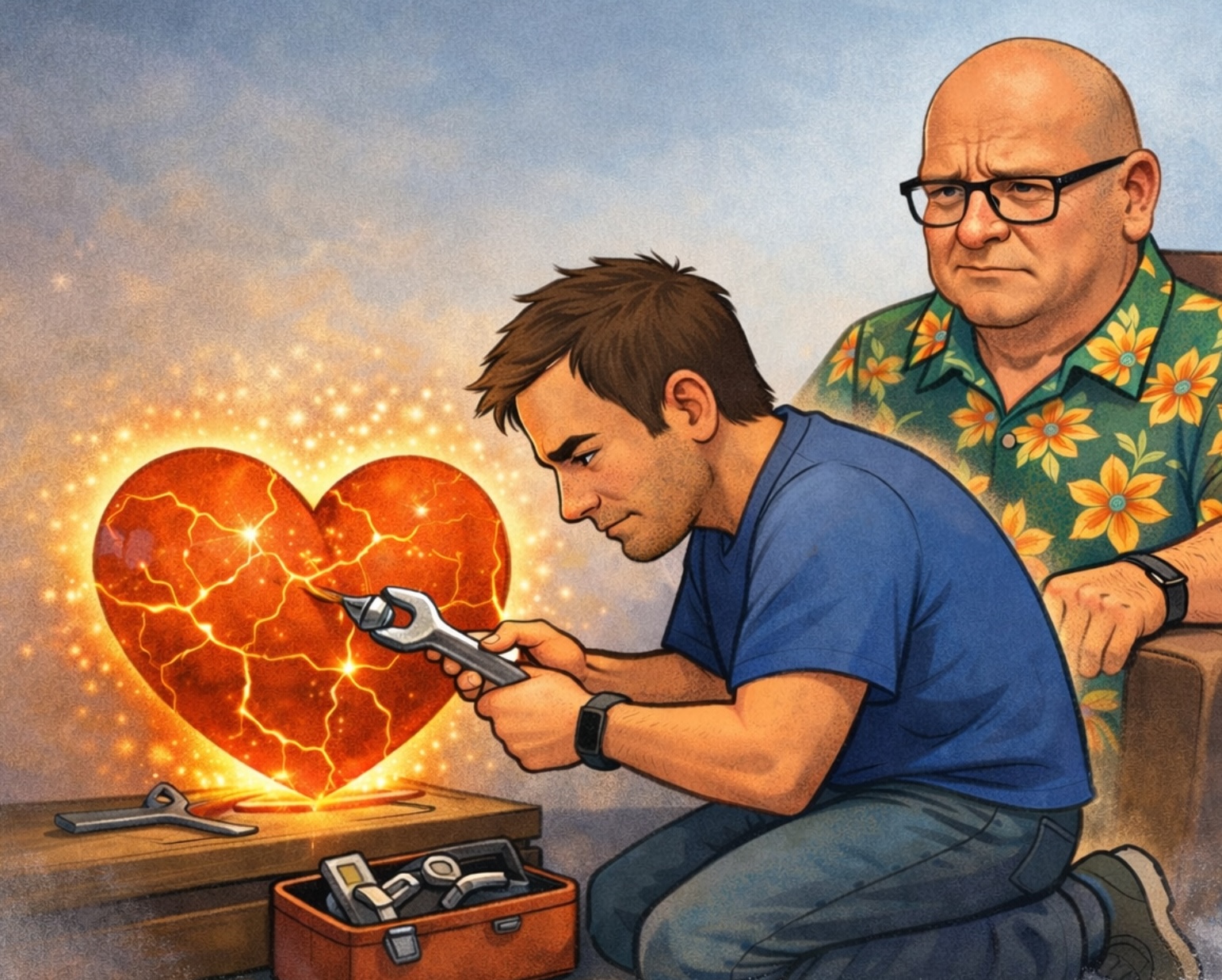
A hammer is incredibly useful.
It’s just a terrible way to remove a screw.

You can try.
You can hit harder.
You can tell yourself you just need better technique.

But at some point, the issue isn’t your effort — it’s that you’re using the wrong tool for the job in front of you.

The same thing happens in relationships.

When the tools seem to be failing, don’t start with self-blame — “What’s wrong with me?”
Start instead with a different question:

“What am I trying to use these tools on?”

Because sometimes the problem isn’t that you’re bad at communication.
Sometimes the relationship itself can’t support what the tools are designed to do.

Meet Alex

Alex is loyal. Family-oriented. A “relationships matter” kind of person. He doesn’t walk away easily. When things get hard, his instinct is to lean in — try harder, explain better, be more careful.

He’s doing the things he’s been told to do:

  • Using “I-statements”
  • Trying to see things from his partner’s point of view
  • Taking responsibility
  • Staying calm
  • Making repair attempts

Not perfectly — but honestly.

And it isn’t working.

He’s paying for it. Emotional exhaustion shows up in his body: aches, pain, fog, fatigue. Work is harder. Daily life takes more effort.

Alex doesn’t mind suffering for love or family. He’ll suffer more if it might fix things.

His mind keeps circling the relationship:

What else can I do? What can I do differently? What am I doing wrong?

He finds endless ways to blame himself.

The Loop That Breaks People

Here’s what keeps happening.

Alex uses the skills — not flawlessly, but earnestly.
Things improve. For a while.
Then… back to square one.

It’s never entirely clear why. The same old fight resurfaces. The trust he thought he’d earned turns out not to exist.

Conversations Alex was sure had been resolved reappear — sometimes with screenshots from months-old texts, fragments of half-remembered arguments, details that don’t even sound the way he remembers them.

So Alex tries again. He swallows the hurt, opens himself up, and leans in harder:

  • listens more carefully
  • chooses his words more precisely
  • takes more responsibility
  • works harder to reassure

And still — nothing sticks.

The calm doesn’t accumulate. The relationship doesn’t stabilize. The same conflicts keep returning, just dressed up differently.

His conclusion becomes painfully simple:

“Nothing is working. I must be the problem. If only…”

What’s Actually Happening in These Relationships

Here’s the part Alex missed.

What looked like engagement and repair was actually the relationship equivalent of trench warfare.

While his partner stayed safely in her trench — lobbing grenades — Alex stood upright in the middle of the battlefield, offering himself as a vulnerable target.

And he didn’t mind taking shrapnel if it meant pulling his partner out of her trench.

Put in therapy language: two nervous systems are doing very different things.

  • One person is trying to calm down, connect, and repair.
  • The other is holding on for dear life to self-protection, safety, and avoiding vulnerability.

So while one person is speaking the language of relationship, the other is speaking the language of survival.

Here’s the non-negotiable truth the Gottman tools quietly rely on:

Repair only works when both people are able and willing to move from “me” to “we.”

When someone is highly activated, defensive, or distrustful, their focus isn’t the relationship. It’s self-protection. Winning. Avoiding vulnerability.

People can say they want repair. They may even restrain themselves from using their biggest weapons. But that doesn’t mean they’re able — not just willing — to be open and receptive.

It’s one thing to say you’re open to reconnection.
It’s another for your nervous system to tolerate it.

And if either person can’t move from me toward we, no amount of good communication will save the conversation.

Signs This Isn’t a Skills Problem

If you’re wondering whether this applies to you, here are some common patterns.

The Reset Problem
You have a good talk. Things feel better.
Then a day or two later, you’re right back in the same conflict — often with more irritation than before.

The Moving Goalposts
You do what was asked. You adjust. You try to meet the need.
But it’s not enough. The standard shifts — for you, not for them.

The Vulnerability Boomerang
You open up because it feels safe in the moment.
Later, that disclosure is used against you in a different argument.
Trusting again gets harder — but you try anyway.

The “Me vs. You” Conversations
Not every discussion turns into a battle — but enough of them do.
Both people are depleted. Both are trying to win.
The conversation never truly becomes we — and without that, the skills can’t do their job.

Here’s the hardest realization:

If the other person can’t or won’t work toward we, this isn’t something you can fix by yourself.

Therapy can help people work through fear, history, trauma, and limited capacity. That’s central to the work. But even with effort and good intentions, change isn’t guaranteed — because you can’t do someone else’s work for them.

That’s why therapists repeat a frustrating truth:

You can only work on yourself.

Or, more plainly:

If your partner can’t or won’t move from “me” toward “we,” there is nothing you can do that will magically make them.

Which leads to the next question.

Why You Keep Trying Anyway

For most of us, our families and partners are foundational. And for some people, the potential loss of those relationships doesn’t just feel sad — it feels unthinkable. Like an existential threat.

So they explain more. Try harder. Soften their needs. Choose better words. Stay longer than they should.

And when none of it works, self-blame steps in.

Here’s the twisted logic:

If it’s my fault, there’s still hope.

If I just say it better, try harder, grow more — maybe it will finally click.

Self-blame keeps hope alive.
Even when the cost of hope — sleep, health, and peace — keeps mounting.

A Gentle Self-Check

This isn’t about diagnosing yourself. It’s about noticing patterns.

  • Do you rehearse conversations like you’re studying for a final?
  • Do you spend more time perfecting how to say something than asking whether it’s safe to say it?
  • Do you feel guilty the moment you consider pulling back?
  • Do you feel calm only when they’re calm?

If your relationship has you doing emotional calculus at 2:00am… that’s data.

And sleep isn’t optional. If you can’t sleep, the relationship is costing you more than mood — it’s costing you health.

Here’s What You Can Do

Once you’re willing to consider that the problems might not be your fault, you can play the game differently.

You don’t need to demand new rules. These are changes you can make on your own.

If your partner responds positively, that’s data.
If your partner escalates, accuses, or punishes you for trying, that’s data too.

Reasonable shifts include:

  • Stop using skills to earn safety.
  • Move from trying to fix the relationship to assessing whether we is actually possible.
  • Replace more explaining with more observing.
  • Build support outside the relationship so connection isn’t your only oxygen source.
  • Set boundaries not to control the other person — but to keep yourself intact.

This isn’t giving up.
It’s getting honest about what the situation can — and can’t — support.

If You Saw Yourself in This

If you read this and thought, “Oh. That’s me,” here’s the hard truth:

This is an incredibly difficult pattern to climb out of alone.

Not because you’re weak — but because the part of you that wants to leave is tangled up with the part of you that believes connection is non-optional.

Working with a therapist who understands attachment, nervous system activation, and boundaries can help.

You might not need more communication skills.
You need a better map.
And sometimes, a steady guide makes all the difference.

Boundaries: They Don’t Work Until You Do

This Post Is for People Who Struggle to Set and Keep Boundaries

Chatting with William

This post isn’t about how to set boundaries. I’ve already written that.

But my friend William—thoughtful, kind, and a former therapist himself—explained to me after reading that piece to say, gently, that something was missing. Not wrong. Incomplete.

Specifically: what has to happen inside before boundaries work on the outside.

A Thoughtful Challenge From a Friend

William has lived a lot of life. He’s not interested in winning arguments—he notices patterns, reflects on them, and then says something that makes you pause.

That’s what he did here.

He pointed out that boundaries haven’t always occupied the central place they do now in psychotherapy. Early therapy focused more on intrapsychic boundaries—ego, superego, conscious and unconscious. The interpersonal boundary boom really took off later, especially in the 1980s and 90s, alongside 12-step work and increased attention to addiction, abuse, and trauma.

Fair point.

But then he named something more important.

The Shadow Side of Boundary Setting

William described watching people set boundaries with pressured speech, fear in their eyes, sometimes even rage—like they were bracing for a fight. Less self-respect, more defensive maneuver. He wondered whether some boundary setting was really about control, or about a frightened part of ourselves trying desperately not to get hurt again.

I didn’t disagree.

I’ve seen people avoid boundaries because they’re afraid of the reaction they’ll get. Afraid someone will get angry. Afraid the relationship will change. Afraid something long-standing might fall apart. These are often relationships with history—family, partners, people who’ve been around for decades.

That fear keeps people from doing what needs to be done. By keeping the smaller peace, they set the stage for a biggerwar—one that tends to break out later, louder, and uglier.

I can’t tell you how often I’ve said this in my office: Good fences make good neighbors. Good boundaries make good relationships.

And if a relationship can’t survive a boundary around something you truly can’t live with? That’s not a failure. Painful, yes—but also clarifying. Why are you working so hard to preserve a relationship that only functions if you keep abandoning yourself?

As God told Abraham in Genesis 12:1: Get thee out.

Why Late Boundaries Turn Into Rage

When William mentioned rage, it might have sounded like an exaggeration. It isn’t.

If you don’t set boundaries, people will take advantage of you. Call it fair or unfair—it doesn’t matter. Humans do what humans do, usually without much awareness of why they’re doing it.

As toes get stepped on again and again, resentment builds. When resentment builds long enough, it hardens into anger. And when anger goes unaddressed, it turns into rage.

At that point, boundaries finally get set—but they’re explosive, damaging, and hard to sustain. They’re powered by emotion rather than conviction. Once the emotional surge fades, the boundary collapses.

The way to avoid rage-boundaries is simple, though not easy: set boundaries earlier.

The Boundary Is With Yourself First

This is where William shared a story that really landed.

Years ago, he called his friend David to talk through a boundary he was planning to set. David listened and then said,
“It sounds like the person you really need to be setting boundaries with is yourself.”

That’s the heart of it.

Before you say anything to someone else, you have to get clear within yourself:

  • What can go
  • What cannot go
  • What you are—and are not—willing to live with

When that clarity is real, it changes your presence. And that presence changes how conversations go. It even changes which conversations you decide to have at all.

William was reminded of something Louise Hay once said—paraphrased, but true to her spirit: if you don’t like what someone is doing, don’t try to change them.

Say “no thank you,” and move toward the kind of relationship and environment you want to participate in.

No drama. No punishment. Just living in line with what you’ve already decided.

Why Boundaries Fail: It’s Not the Words

The number-one reason boundaries fail is simple: they’re never actually set. They’re wished for rather than made. A close second is that they’re framed as requests instead of limits.

But even when people do everything “right,” many still assume boundaries fail because they didn’t say them properly. Wrong words. Wrong tone. Too soft. Too harsh. If only they’d rehearsed better.

In my experience, boundaries don’t fail because of wording. They fail because the person setting them doesn’t yet believe them.

You can’t hold a boundary you don’t mean.

I learned this years ago as a new parent. Our young child loved climbing into our bed at night. We said “no” and put him back—again and again. Minutes later, a warm, loving, beautiful child was right back where he wanted to be.

It wasn’t until my therapist told me—rather memorably—that boundaries are like curses in Harry Potter lore: you have to mean them.

Once the boundary was internally settled—this is no longer happening—things changed. Same words. Different intention.

Healthy Boundaries Start With Internal Conviction

The earlier post was about boundary mechanics. This one is about why boundary work keeps therapists like me fully employed.

If boundary setting feels anxious, brittle, or explosive, that’s not a sign you’re failing. It’s a sign more internal work is needed—the work of deciding, quietly and firmly, what you’re no longer available for.

Once that decision is made, boundaries tend to come out cleaner. Calmer. Less like a threat and more like a fact.

William didn’t convince me boundaries are outdated. But he did remind me—and I think he’s right—that boundaries work best when they aren’t weapons, ultimatums, or last-ditch attempts to control outcomes.

They work when they reflect something already decided inside.

And those are the boundaries that last.

Families Are the Best Reason for Boundaries. Ever.

Everywhere you look, there’s advice on how to “get along with family.”
Keep the peace. Keep it light. Pretend everyone gets along because… “we’re family.”

Right. And I’m the Tooth Fairy.

Here’s what never makes a decorative pillow:
Families are wonderful, messy, loving, infuriating bundles of history and triggers.
Being around them can turn even the most therapized adult into their 10-year-old self in three seconds flat.

You spend years individuating — building a life based on your values — and then you reunite with family and suddenly Dad’s cigar and Uncle Oscar’s fourth-martini politics trigger a suffocated rage you’d forgotten you’d ever felt.

Family gatherings are stressful for plenty of reasons, but here’s one of the biggest ones:
They drop us right back into the places where we once had zero power.
That’s why it may be worthwhile for you to think of boundaries as survival skills for family gatherings.

News Flash! Requests ≠ Boundaries! 

We’re socialized to be nice, and to make polite requests:

  • “Please don’t bring up politics.”
  • “Maybe cut back on the alcohol?”
  • “Can you smoke outside?”

Requests keep the peace in the moment but accomplish very little, because you’re asking someone to stop doing something they’ve been doing for a very long time. Not happening — not because they don’t love you, but because this is who they are. So let’s have a look at what an actual boundary looks like:

Request: “Please stop raising your voice.”
Boundary: “If you raise your voice, I’m stepping away.”

One depends on their cooperation.
The other depends on your spine.

Boundaries don’t control the room. They clarify you — your choices, your comfort, your plan.

Boundary Buffet: Help Yourself!

Instead of:
“Would you please be careful about how much you drink this year?”
Try:
“If things get rowdy, I’m leaving early.”

Instead of:
“Please don’t smoke that cigar.”
Try:
“If there’s smoking indoors, I’ll be outside.”

Instead of:
“Maybe skip the weed at dinner?”
Try:
“If substances come out, I’m out.”

Instead of:
“Let’s avoid politics.”
Try:
“If politics come up, I’ll change the subject or step out.”

Boundaries Aren’t About Them. They’re About You. 

If you’re like most of us, it’s uncomfortable to ask someone to do something that will help us enjoy a family event. Try thinking of it this way:
You’re not controlling others. You’re letting people know how you’ll take care of yourself when certain “family specials” pop up.

Even if you did want to change their behaviors, they’re the only ones who can make that change. So, it can be helpful to reframe the idea of setting a boundary from being about someone else’s behaviors to being about our own – our actions, our limits, and what we’re willing to participate in.

Put another way: You’re not telling people what to do — you’re telling people what you will do.

That’s it. No threats. No ultimatums. Just clarity.

Hosts, Guests — It Doesn’t Matter

Whether dinner is at your place or someone else’s, your boundaries belong to you.

You don’t need permission.
You don’t need consensus.
You don’t need the family vote.

And here’s the kicker: setting boundaries may have consequences. You might not get invited to your nephew’s birthday party. You might miss Uncle Vito heading to the kids’ table to demonstrate his ability to burp the alphabet in one heroic, horrifying go.

But that’s the point: you choose what you endure — or don’t.

The Bottom Line

You cannot fix your family. It’s not your job.
Your job is to take care of yourself in the beautiful, chaotic circus you were born into.

Boundaries make that possible.
They protect your peace.
They create space for real connection — the honest, grounded, sustainable kind.

Everything else is optional.

Love, Power, and the Checkbook

The House That Looked Like Order

Before apps and automatic transfers, there was the kitchen table — the quiet command center of family life. That’s where the smell of Grandma’s fresh-baked cookies filled the air, homey artwork lined the walls, and a starburst clock kept perfect time — an optimistic little sun presiding over the daily order. Everything about that house said warmth, routine, and safety, or at least looked that way.

That sense of security came from the appearance of order. Bills got paid, dinner appeared, and the world seemed to make sense. What your memories may not include are the unspoken assumptions and quiet sacrifices — the cultural constraints and gender roles that kept the gears turning. The invisible machinery made home feel safe, even if it wasn’t always fair. (Spoiler: emotional labor wasn’t even called labor yet.)

Bacon, Grease, and the Golden Rule

Back then, Grandpa brought in the bacon and was honored for the sizzle; Grandma cooked it and used the grease to keep the household running. On the surface, it looked efficient, even loving — everyone had their role. But that tidy division of labor came with a grease stain — the kind that doesn’t wash out: built-in inequity.

Those old-fashioned values leaned on what was called the “Golden Rule,” the expectation of fairness. But the truer saying, then and now, is “Whoever has the gold, makes the rules.” Money talks, and the rest of us make do. Grandma? She “made do” with plenty of love, a smile, a sigh, and a spotless kitchen. Grandpa got the last pour of bourbon and the final say — or so he thought.

Modern Money, Same Old Tension

These days, there’s no predetermined answer to who earns the money, who manages it, or who decides how it’s spent. Some couples merge accounts, others split them, some go halfsies in the name of fairness — but none of it cancels out the quiet (or not-so-quiet) conflicts over safety, control, and trust. The Golden Rule still applies, separate bank accounts notwithstanding(Venmo didn’t solve patriarchy; it just made reimbursements faster.)

The Math Doesn’t Add Up

Splitting everything 50/50 sounds fair in theory but rarely works in practice. So much starts out unequal — income, labor, caregiving, emotional bandwidth. Who’s caring for kids, aging parents, pets, or holding the family’s emotional center? And that’s before we even talk about the fact that people naturally want different things.

And then there’s the invisible labor — the person who plans, anticipates, and reminds; who knows when the bills are due, when the insurance renews, when the kids’ tuition hits. That’s not just organization — it’s mental load. It’s the emotional weight of making sure everyone else feels secure, often without acknowledgment or help. And yes, it’s work. (No pension, but lots of receipts.)

Money is Power

Sharing money is sharing power, and you can’t balance dreams, safety, and groceries on the same scale. It’s less about math and more about trust — tuning into your partner, understanding why you each need what you need, and saying it out loud. (Pro tip: do that before the credit-card bill arrives.) Skip the debate over who pays what, and ask instead: What does money mean to you right now? What are you afraid of losing? What would make you feel safe? Those questions build more security than any spreadsheet ever could.

The Grandparents in the Wallet

Our relationship with money doesn’t start in adulthood; it starts in childhood. We watch how our parents and caregivers earn, spend, save, and fight about it — and then we copy, rebel, or overcorrect. Maybe you grew up in a house where money was tight and every purchase had to be justified. Maybe it was plentiful, but used as proof of love or control. Either way, the story you learned back then shapes how you handle it now.

Some people calm their anxiety by tracking every dollar, believing that if they stay on top of the numbers, nothing bad can happen. Others feel safest by letting someone else handle the money — not because they don’t care, but because watching the numbers rise and fall makes them nervous. And some of us do both, depending on the week.

That’s why “You handle it” isn’t always about convenience — it can mean, I don’t want to feel this anxiety right now. And “I’ll handle it” isn’t always about competence — it can mean, I can’t relax unless I’m in control. What looks like a simple division of labor is often two nervous systems negotiating for safety.

When couples start talking about money, they’re really talking about trust, fear, and the ghosts of old family stories — ghosts that still whisper what’s “normal,” what’s “enough,” and who’s supposed to be in charge.

Whose Wallet Is It Anyway?

So how do you figure out who should “run” the money? Start by dropping the idea that you can share a life but keep your finances separate from it. You’re already financially intertwined — pretending otherwise just hides the power dynamics that are already at play. Not everyone has to love spreadsheets or take on the heavy lifting, but like any other power issue in a relationship, the agreement should be clear and consensual. Talking about it doesn’t make things awkward; it keeps them honest.

Begin with three conversations — ideally before someone’s holding the credit-card bill like a subpoena:

  1. Trade Family Stories. Ask each other what money was like growing up — who controlled it, who avoided it, and what that felt like. You’ll learn more in ten minutes of story than in a year of spreadsheets.
  2. Talk About Triggers. What parts of money make you anxious or shut down? Taxes? Overspending? The “what ifs”? Knowing each other’s danger zones helps you assign roles that fit strengths, not fears.
  3. Decide on Transparency. Whether one of you pays the bills or you both do, agree that neither is “in charge.” You’re both custodians of shared trust. Check in regularly — not to audit, but to connect.

The goal isn’t perfect equality; it’s collaboration without fear. When the system starts to wobble, go back to curiosity: What’s happening underneath this money fight? Nine times out of ten, it’s not about the numbers — it’s about safety, respect, or the need to feel heard.

Cookies, Bourbon, and an Old Grease Stain

And maybe, just maybe, picture Grandma and Grandpa again — sitting at that kitchen table, the smell of cookies still in the air, the checkbook open between them. Imagine Grandma leaning in this time, pen in hand, eyes locked with Grandpa’s. They’re not fighting; they’re smiling — possibly because she just found out he can bake too. The cookies are still warm, the bourbon’s still poured, and the old grease stain’s finally wiped clean.

This time, the power isn’t making a mess. They’ve learned to cook without splatter — less smoke, less cleanup, more flavor. It takes less energy to make it work, and it leaves a little extra for what matters most: another round of cookies… and bourbon.

Moving In Together? Don’t Skip the Stress Test

Before you move in…

Paperwork ≠ Intimacy

Thinking about moving in together? Let’s clear something up: no amount of paperwork or negotiation will guarantee a good outcome if you haven’t really gotten to know each other.

Paperwork doesn’t build intimacy. A lease won’t make your partner kinder, tidier, or less obsessed with leaving socks in creative places. And it definitely won’t change the way they load the dishwasher.

Compatibility Isn’t Just the Good Times

Nobody moves in thinking they’re incompatible. But most of us make that decision based on how we’ve experienced our partner at their best. True compatibility shows up when you’ve also seen them at their worst.

Stress Reveals the Real Story

Here’s why: when life is easy, we tend to show up as our best selves. We’re generous, collaborative, and open. Early in a relationship, we even keep our “party manners” on. But under stress, we default to our attachment style — the protective, defensive self. That’s when the anxious partner clings, the avoidant partner pulls away, and the secure partner is left wondering what just happened.

Want to dig deeper? Here’s a primer on attachment styles, one of the most well-researched theories in relational psychology: Attachment Styles and Relationships (The Gottman Institute).

Love Alone Isn’t Enough

Bluntly: the person you think might be “marriage material” has a dark side. We all do. Stress is what brings out the rough edges. And if you’re counting on “love will find a way,” the divorce statistics suggest otherwise.

The Big Four Questions Before You Move In

The usual advice about moving in covers the basics:

  • Motives. Love + joy? Great. Saving money? Congratulations, you’ve just found the world’s priciest roommate.
  • Boundaries. Love without them burns out. Boundaries without love isolate. Pick your poison.
  • Power. Money, assets, anger, even the “need to please.” Equality’s a myth. Fairness is the goal.
  • Commitment. If you’re doing it “to see what happens,” what usually happens is resentment.

All of these matter — but they assume compatibility. And you can’t measure compatibility until you’ve seen how your partner (and you) respond when things go wrong.

Try a Stress Test

Now, you can’t exactly banish your partner to Siberia or create stress on purpose by hiding their underwear. But you can take a trip together — somewhere unfamiliar, long enough and bumpy enough to test how you both cope when life isn’t picture-perfect. At the very least, you’ll learn whether your partner snores like a chainsaw before the honeymoon.

Vacations aren’t cheap. But they’re a whole lot cheaper than moving in, moving out, and way, way cheaper than divorce.

Bottom Line

Moving in together isn’t just about splitting Wi-Fi. It’s about building a life. And before you do that, make sure you know not only who your partner is when things are easy — but who they are when things get hard.


« Older posts

Sidebar